Staying consistent feels really hard sometimes, doesn’t it? You start out with big plans, full of energy. Maybe it’s a new fitness routine, learning a skill, or even just keeping your house tidy.
But then, life happens. Motivation dips. Things get busy.
Before you know it, you’re back where you started. It’s a common struggle, and you’re not alone.
Staying consistent is about building habits that stick, even when you don’t feel like it. It involves making small, manageable changes and creating systems that support your long-term goals. It’s less about willpower and more about smart strategies for everyday life.
What is True Consistency?
Consistency means showing up. It means doing the thing you set out to do. You do it regularly.
It doesn’t matter if it’s perfect. It doesn’t matter if you feel super inspired that day. The key is simply to do it.
It’s like a gentle stream carving a canyon. It doesn’t rush. It just keeps flowing.
This steady action builds momentum. Over time, these small actions add up. They create big results.
Think about building a wall. Each brick is a small effort. Placed one after another, they make something strong and lasting.
Consistency is the mortar holding those bricks together. It’s doing the work even when you don’t see immediate rewards.
Why does it feel so tough? Often, we set goals too big. We expect too much too soon.
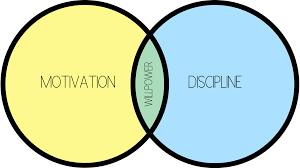
We rely on feelings like motivation. Motivation is like a fleeting friend. It shows up when it wants.
It leaves just as quickly. True consistency is built on something more solid. It’s built on discipline and smart systems.
It’s about making the desired action the easiest option. It’s about removing barriers. It’s about making the path to your goal clear and simple.
When you focus on the process, not just the outcome, consistency becomes more achievable. You celebrate the act of doing, not just the final success.
This is different from perfectionism. Perfectionists often struggle with consistency. They wait for the perfect moment.
They get discouraged by small setbacks. Consistency, on the other hand, embraces imperfection. It understands that “good enough” today is better than “perfect” never.
My Own Battle with the Consistency Monster
I remember when I first wanted to write a book. I had this story burning inside me. I pictured it finished, sitting on a shelf.
I bought notebooks. I made elaborate outlines. For the first week, I wrote every single day.
I felt amazing! Then, work got crazy. A friend had a crisis.
My dog got sick. Suddenly, writing felt like a distant dream.
I’d open my laptop, stare at the blank page, and feel a wave of guilt. “I should be writing,” I’d tell myself. But the pressure felt too much.
So, I’d close it. This went on for months. The dream of the book faded.
The guilt lingered. It felt like a failure, a sign that I just wasn’t cut out for it. The consistency monster had won.
What I realize now is I made it too hard. I needed to write for hours. I needed to produce perfect chapters.
I didn’t have a system. I didn’t have a plan for when life got messy. I just had a big, scary goal and a whole lot of wishful thinking.
That experience taught me a tough, but valuable, lesson about how consistency truly works.
It’s not about grand gestures. It’s about small, steady steps. It’s about showing up even when you don’t feel like it.
It’s about being kind to yourself when you slip up, and then getting right back on track. That consistent stream, however small, eventually carves the path. It always has.
Small Steps, Big Impact: The Power of Tiny Habits
Concept: Tiny Habits is a method developed by BJ Fogg. It suggests you make desired behaviors incredibly small. Then, you link them to existing routines.
You celebrate small successes to build momentum.
Example: Want to meditate? Start by meditating for just 30 seconds after you brush your teeth. That’s it.
This tiny habit is easy to do. It builds consistency without demanding huge effort.
The Science Behind Why We Struggle
Our brains are wired for habit. Habits help us conserve energy. They automate actions.
This is good for survival. Think about driving a familiar route. You don’t think about every turn.
Your brain just does it.
But forming new habits is tricky. It takes repeated effort. It also takes making the new behavior rewarding.
If a habit doesn’t feel good, or doesn’t lead to a positive outcome, our brain tends to drop it. This is why relying solely on motivation doesn’t work. Motivation is an emotion.
Emotions are unstable.
Neuroscience tells us that habits are formed in the basal ganglia. This is a deep part of our brain. When we repeat an action, the neural pathways get stronger.
This makes the action easier and more automatic over time. It’s like walking through tall grass. The first time is hard.
After many walks, a clear path emerges.
Another factor is our environment. If your environment supports a habit, you’re more likely to do it. If it makes the habit difficult, you’ll struggle.
For example, if you want to eat healthier, but your pantry is full of junk food, you’ve set yourself up for failure. The junk food is the easy, tempting option.
Our energy levels also play a huge role. When we are tired, stressed, or overwhelmed, our willpower is low. We tend to fall back on old, comfortable habits.
This is why consistency often breaks down during busy or difficult times. It’s not a personal failing. It’s biology.
Understanding these underlying reasons helps us be more patient. It allows us to create strategies that work with our brain, not against it. Instead of blaming ourselves, we can adjust our approach.
Quick Scan: Why Motivation Isn’t Enough
- Emotion vs. System: Motivation is a feeling. Consistency is a system.
- Unreliable: Feelings change daily. Systems can be built to last.
- Short-Term Boost: Motivation gives a quick start. It doesn’t sustain long-term effort.
- Can Lead to Burnout: Relying on motivation can lead to extreme effort followed by complete burnout.
Building Your Consistency Toolkit
So, how do we actually build this lasting consistency? It’s about smart strategies. It’s about creating a supportive environment.
It’s about being kind to yourself. Here are some proven ways.
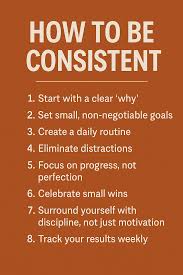
1. Start Ridiculously Small
This is the cornerstone. If you want to exercise, don’t aim for an hour. Aim for 5 minutes.
If you want to read more, read one page. If you want to drink more water, drink one extra sip. Make the task so easy you can’t say no.
Once you do the tiny task, celebrate it. A simple “Yes!” or a fist pump. This positive reinforcement signals to your brain that the action was good.
It makes you want to do it again. This is the first step in creating a habit loop: Cue, Routine, Reward.
These tiny actions build the habit muscle. They create the consistent behavior. Later, you can gradually increase the duration or intensity.
But start small. So small, it feels almost silly.
2. Anchor Your Habits
Link your new habit to an existing one. This is called habit stacking. It uses an established routine as a cue for your new behavior.
For example, “After I finish my morning coffee, I will write one sentence.” Or, “After I put my keys down, I will immediately put my workout clothes on.”
Choose an anchor that happens reliably every day. This makes the cue consistent. The new habit then becomes a natural extension of your existing routine.
This reduces the mental effort needed to remember or initiate the new behavior.
Think about your daily flow. Where can you insert a tiny new habit? Morning routine?
Before bed? After a meal? Find that existing action and attach your new one to it.
3. Make it Obvious and Easy
Your environment plays a huge role. If you want to exercise, lay out your workout clothes the night before. If you want to eat fruit, put a fruit bowl in a prominent spot.
If you want to read, keep a book on your nightstand.
Conversely, make undesirable habits difficult. If you want to reduce screen time, put your phone in another room. If you want to stop snacking, hide the unhealthy snacks.
Removing temptation makes it easier to stick to your plan.
This is about design. You design your life and your surroundings to support the habits you want. It’s proactive.
It removes the need for constant willpower.
4. Track Your Progress
Seeing your progress is incredibly motivating. It provides tangible proof that you are moving forward. This can be as simple as marking an ‘X’ on a calendar for each day you complete your habit.
Or using a habit tracking app.
The goal is to create a visual representation of your consistency. This streak becomes something you don’t want to break. It adds a small element of gamification to your efforts.
It also helps you identify patterns. Are there days you consistently miss? Why?
Don’t break the chain. This phrase is powerful. It encourages you to keep going, even on days when it’s tough.
The visual tracker makes your commitment tangible.
Contrast: Myth vs. Reality of Consistency
| Myth | Reality |
|---|---|
| You need strong willpower to be consistent. | You need smart systems and environments. |
| Consistency means doing things perfectly every time. | Consistency means showing up, even imperfectly. |
| Motivation is the key driver of consistency. | Habits and routines are the drivers. |
| Consistency requires big, heroic efforts. | Consistency is built on tiny, repeatable actions. |
5. Embrace Imperfection and Plan for Setbacks
This is perhaps the most important tip. Life is unpredictable. You will miss days.
You will fall off track. This is normal. The key is not to let one missed day turn into two, then three, then a complete stop.
Have a “get back on track” plan. If you miss a workout, don’t beat yourself up. Just commit to doing it the next day.
The “never miss twice” rule is incredibly effective. It acknowledges that slip-ups happen, but it prevents them from becoming a downward spiral.
Forgive yourself quickly. Learn from the missed day, but don’t dwell on it. Focus on getting back to your routine.
This resilience is what separates those who achieve lasting change from those who don’t.
Think of it like riding a bike. You might wobble. You might even fall.
But you get back up. You adjust your balance. You keep pedaling.
The fall is just a part of the learning process.
6. Find Your Why (and Keep It Visible)
Why do you want to be consistent with this goal? What is the deeper meaning? Is it for your health?
For your family? For personal growth? Knowing your “why” provides motivation when things get tough.
It’s the fuel that keeps you going.
Write your “why” down. Put it somewhere you’ll see it every day. On your mirror, on your desk, as your phone background.
Remind yourself of the core reason behind your efforts. This connects your daily actions to a larger purpose.
When you’re feeling like giving up, revisit your “why.” Does the reason still matter? If it does, that’s your signal to push through, even just a little bit. This clarity helps you stay focused on what’s truly important.
7. Schedule It In
Treat your habit like an important appointment. Block out time in your calendar for it. If you want to write for 30 minutes, schedule “Writing Time” from 7:00 AM to 7:30 AM.
This makes it a non-negotiable part of your day.
When it’s in your schedule, it’s harder to skip. It has the same importance as a work meeting or a doctor’s appointment. This conscious scheduling reduces the mental energy spent deciding whether or not to do the habit.
This is especially helpful for new habits that don’t feel natural yet. Once the habit becomes ingrained, you might not need a strict schedule. But in the beginning, scheduling is a powerful tool for ensuring consistency.
Observational Flow: Building a Consistent Morning Routine
Step 1: Identify your anchor habit (e.g., waking up).
Step 2: Choose a tiny new habit (e.g., drink a glass of water).
Step 3: Link them: “After I wake up, I will drink a glass of water.”
Step 4: Make it easy: Have the glass and water ready the night before.
Step 5: Track it: Mark it on your calendar.
Step 6: Celebrate: Acknowledge yourself for doing it.
Step 7: Gradually build: Once automatic, add another tiny habit (e.g., 1 minute of stretching).
What Consistency Means for Your Goals
So, what’s the takeaway from all this? How does mastering consistency impact your life and your goals?
When It’s Normal to Struggle
It’s completely normal to struggle with consistency when you are:
- Starting a brand new habit.
- Dealing with a major life event (moving, new job, loss).
- Feeling stressed or overwhelmed.
- Trying to change a deeply ingrained habit.
These are times when your systems will be tested. It’s okay if you don’t hit your targets perfectly. The goal is to maintain forward motion, however small.
When to Pay Closer Attention
You might need to pay closer attention or adjust your strategy if:
- You haven’t done the habit for weeks, not just days.
- The habit has stopped bringing any positive feeling or outcome.
- You feel intense dread or anxiety about doing the habit.
- Your system for consistency is completely broken down.
These are signs that your current approach isn’t working, and you might need to re-evaluate. Perhaps the goal needs adjustment, or the method for achieving it.
Simple Checks You Can Do
Here are a few quick checks:
- Is it too hard? If yes, make it smaller.
- Is it obvious? Can you see the cues for your habit?
- Is it rewarding? Does it feel good to complete it, even a little?
- Is it realistic for this week? Sometimes life demands a temporary pause or simplification.
By regularly checking in with these points, you can ensure your consistency strategies are working for you, not against you.
Quick Tips for Staying the Course
Here are some actionable tips that can make a big difference:
- Buddy Up: Find an accountability partner. Share your goals and progress.
- Visualize Success: Spend a few minutes each day imagining yourself successfully completing your habits.
- Reward Yourself: Plan small, healthy rewards for hitting milestones.
- Review and Adjust: Look at your progress weekly. What’s working? What isn’t? Be willing to tweak your plan.
- Be Patient: Lasting change takes time. Don’t expect overnight miracles.
- Focus on Process, Not Just Outcome: Celebrate the act of doing the habit, regardless of the immediate result.
These tips are simple, but powerful. They focus on building a sustainable system for growth.
Frequent Questions About Staying Consistent
Is it possible to become a perfectly consistent person?
No, perfection is not the goal. True consistency is about reliable effort over time, not flawless execution every single moment. Everyone has off days.
The key is to recover and keep going.
How long does it take to form a consistent habit?
The old “21 days” idea is a myth. It can take anywhere from 18 to 254 days for a habit to become automatic, depending on the habit’s complexity and the individual. Focus on consistent practice, not a rigid timeline.
What if I feel like I’m always starting over?
This is a common feeling. Each time you restart, you learn something new. View it as a cycle of improvement, not a failure.
Focus on what you learned and apply it to your next attempt. Tiny, consistent actions are key.
How do I stay consistent when I lose motivation?
Motivation is unreliable. Rely on your habits and systems. Make the action so easy it requires no motivation.
Link it to an existing routine. Remind yourself of your “why.” Your system should work even when your feelings don’t.
Can consistency help with mental health?
Yes, absolutely. Establishing consistent routines can provide a sense of control and predictability, which is beneficial for mental well-being. Small, achievable goals met consistently can also boost self-esteem and reduce feelings of overwhelm.
What is the biggest mistake people make when trying to be consistent?
The biggest mistake is trying to do too much too soon. People often set overly ambitious goals that lead to burnout. Starting too small, making habits easy to do, and planning for setbacks are much more effective strategies.
Final Thoughts on Lasting Consistency
Building lasting consistency isn’t about having more willpower. It’s about being smarter with your effort. It’s about building simple systems.
These systems work for you, day after day. Start small. Make it easy.
Track your progress. And always, always be kind to yourself when you stumble. That’s how you build something that lasts.